Introduction
In this learning activity, you will explore the ethical considerations, accessibility opportunities, and environmental concerns with regard to digital technology.
Ethics, accessibility, and daily environmental considerations
Think

When you think of ethics, accessibility, and environmental considerations, what comes to mind? What does each mean to you? Scroll through the following images for some visual representations of each phrase.
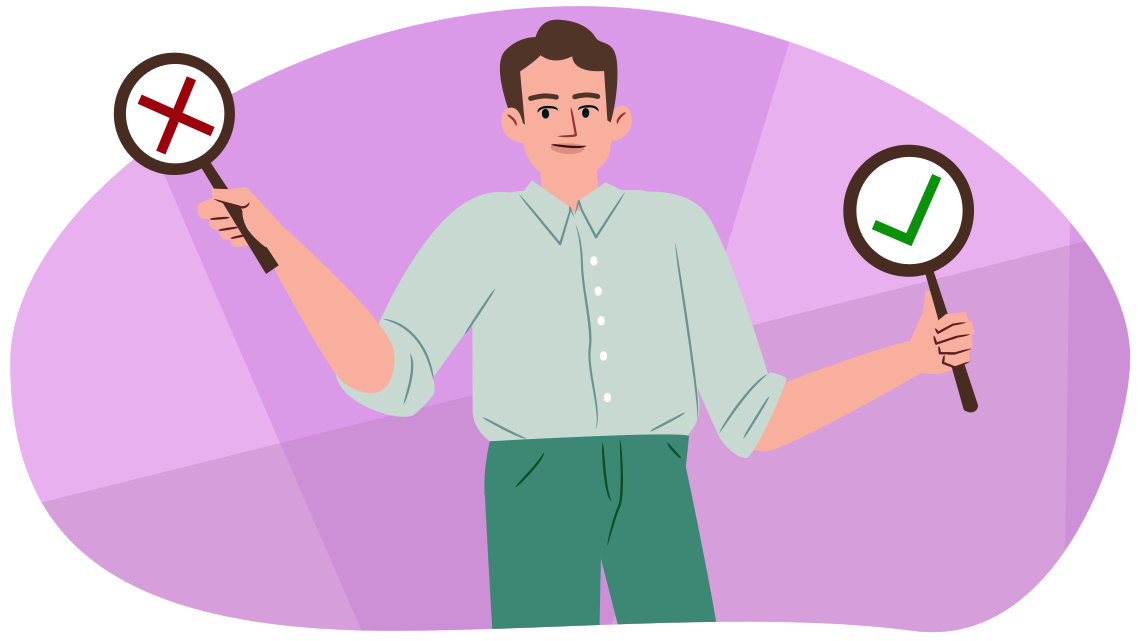

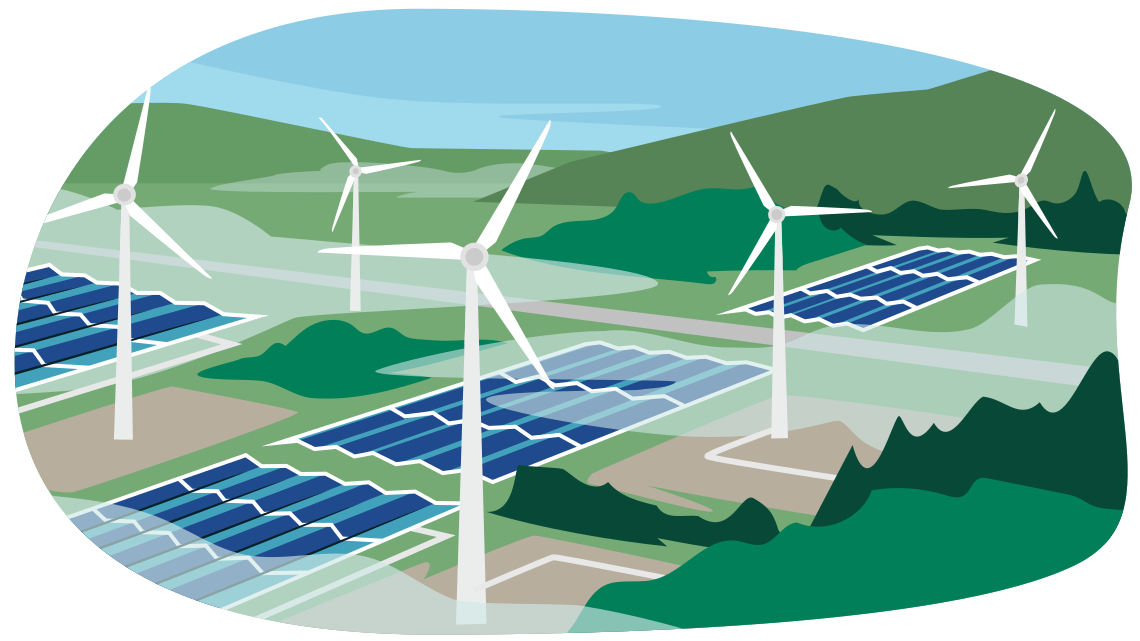
Think of examples of each that you encounter on a daily basis. For example, auditory walk signals at crosswalks help make them more accessible.
Join the discussion

Everyday examples of ethics, accessibility and environmental considerations
Part 1: Initial discussion post
Share one example of either ethics, accessibility, or environmental consideration that you thought of. In your discussion post, outline the following pieces of information:
- Which of the three topics is this an example of?
- Describe how this example relates to the chosen topic.
- Is this example something that is being done well, or could it be done better?
- Is there a technology component to this example? If so, describe.
Part 2: Read and respond
Read through your classmates’ posts and comment on two posts. Ask a question that you may have about the example they described or make an observation about this example.

Ethics
Ethics has many definitions depending on the context. Doctors, for example, have an ethical code that states they will not do harm. A Medical Ethicist studies ethics specifically related to the medical field. This would include a study of the ethical considerations needed when designing an IoT device for use in medicine. *
Definition

Computer ethics involves the implementation and use of computing resources. It includes methods and procedures to avoid infringing copyrights, trademarks, and the unauthorized distribution of digital content.
Computer ethics includes the process of designing a device, device creation, marketing, and selling hardware, as well as using digital materials. The most commonly found ethical issues in computing are breaking copyright laws and the illegal sharing of resources.
In Learning Activity 1.2, we discussed the importance of citing sources. Using proper referencing styles gives the author/creator recognition for the work and informs the reader where the information came from.
Discover more

Ethical issues are a big concern for many organizations. Search online for an example of an organization dealing with an ethical issue. The issue can fall under any branch of ethics, not just computer ethics. Summarize the article and make sure you create an APA reference to go along with the summary. You will use this summary to create an entry into your learning journal later in this learning activity.
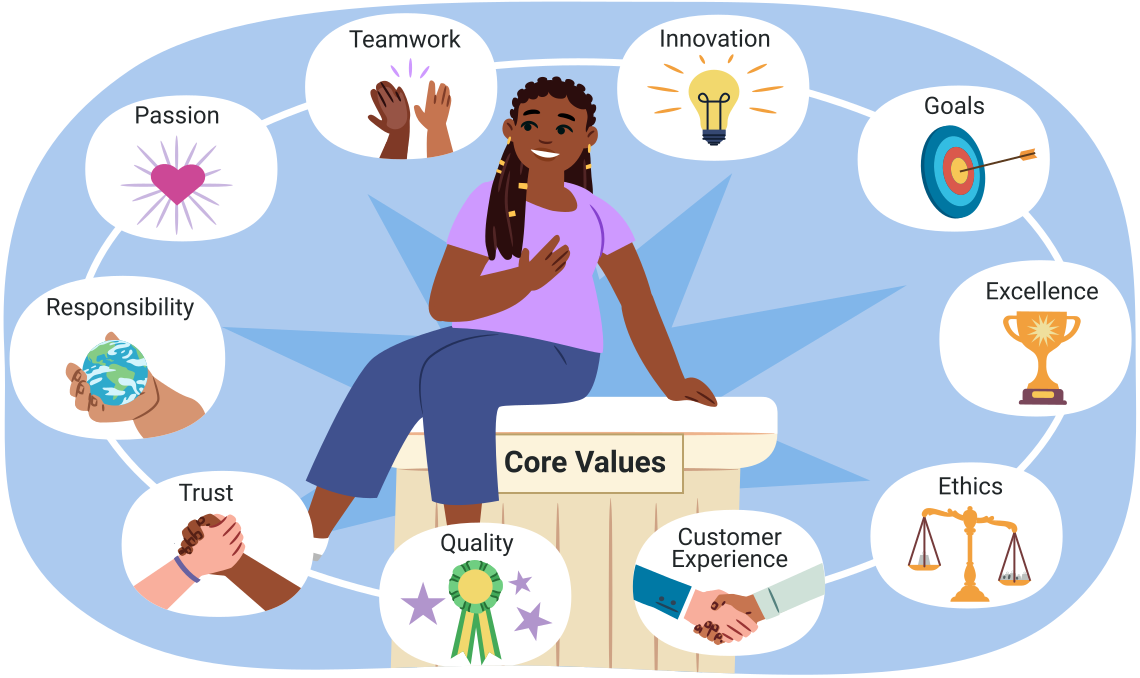
Explore the above image. What is it communicating to you? How does this relate to the concept of ethics? Think about the connection between good ethical choices and the article you summarized.
Learning journal

Record your thoughts about ethical issues as an entry in your learning journal. In your entry, include a summary of the ethical issue and a reference to the source of the information found. If you used more than one source for information, make sure you cite all of your sources.
Accessibility
Accessibility is a measure of how usable a device or system is to all people, including those with disabilities or impairments. In the Introduction section of our course, there is a tab titled Accessibility Statement. (Opens in a new tab) Review the statement again and think about how this online platform is working to be accessible to as many students as possible. Are there groups who would not be able to complete this course on this platform?
Not all devices can be accessible to all people. For example, a smartwatch that tracks steps does not accurately measure the distance travelled by a person in a wheelchair. This example came from a question posed by a wheelchair user who was training for a marathon and wanted to participate in a smartwatch company's motivational program where users earn badges for completing tasks.


The smartwatch company was not able to accommodate this person to earn this badge; however, the company’s product is accessible to this user for tracking their training in other ways. The question to consider is: How can we design products to be as accessible and ethically created as possible? Do all products need to be accessible to all people?
Accessible devices for everyday life
Today, many devices that are available on the market are designed for everyone and make it easier for people of all abilities to use. For example, a connected lightbulb can be controlled on a separate device such as a smart phone or tablet. This makes changing the brightness along with using the on and off features as simple as checking on a connected device. For people with mobility or strength concerns, having to move often to control the light fixture can be a challenge.

By designing a connected lightbulb, the product is more accessible to people with mobility issues. This is just one of many examples of a device that is designed and marketed to all people with the additional benefit of being accessible to people of different abilities.
There are five identified barriers to accessibility for persons with disabilities, according to the Government of Ontario:
- attitudinal
- organizational or systemic
- architectural or physical
- information or communication
- technological
Learning journal
Use your favourite search engine to find definitions for each of the five identified barriers. For each, include at least one example of what the barrier is as well as one way organizations or individuals can remove the barrier.
Environmental considerations
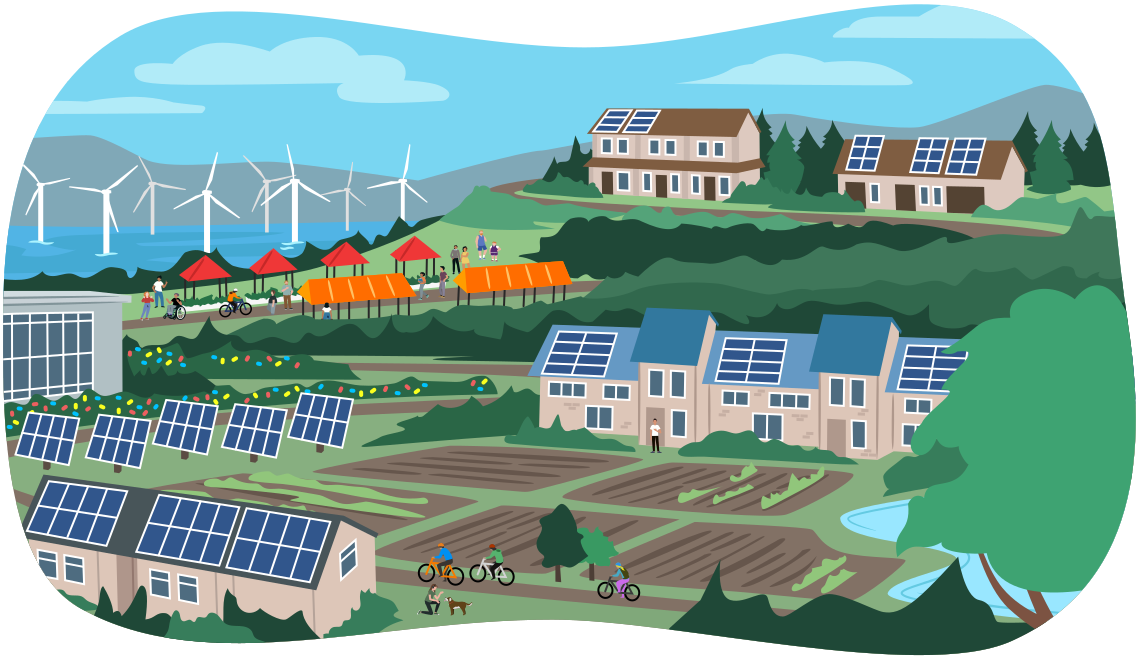
Earlier in the course, we learned about Danielle Boyer. One of the robots designed by Danielle’s organization is a robot that sorts recycling. Robots and devices that help clean the environment are one way that devices can help offset environmental issues.
When designing technological products, it is also important to consider the environmental impacts of building the product, the energy use of the product, and the safe disposal of the device.
Metals

Metals are needed for digital devices to operate. The mining and refining of these metals impact the environment and ecosystems.
For this activity, you can choose to work together in groups or individually. Check with your teacher for further instructions.
Choose one of the following metals to research:
- tin
- cobalt
- palladium
- nickel
- neodymium
- lithium
Use your favourite search engine and find the following set of information for your chosen metal. You may want to make a copy of this chart in your notebook:
|
Metal Information |
Notes |
|---|---|
|
Metal name |
|
|
How is this metal mined? |
|
|
Where in the world is the metal found? |
|
|
What types of products is this metal used in? |
|
|
How much of the metal is needed to produce a device or how much is mined yearly? |
|
|
Are there other concerns about this metal's use, such as health concerns around working conditions, environmental concerns, limited quantities available, etc.? |
|
|
Sources used |
Join the discussion
Metals, production, and everyday products
Once you have finished conducting some research online about your chosen metal, create one discussion board post with your findings. Read through the information posted by other groups on the other metals needed for electronic devices. Take note of any information that relates to your IoT device for later in this Learning Activity.
Lifespan of devices
All objects created have a lifespan. We can make choices to build and design objects with longer lifespans or shorter lifespans. For example, building a washing machine. If we use strong parts and high-quality metals the machine will have a longer expected lifespan than if the metal used will easily rust.
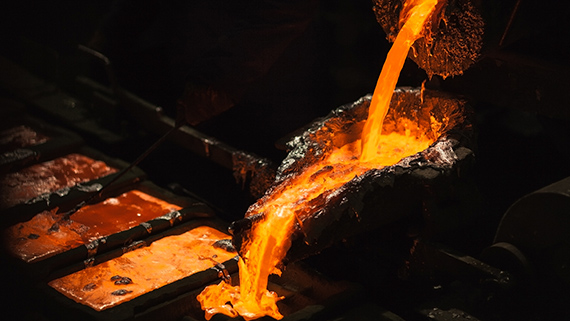
Beginning of metal life: Production of aluminum master alloys at a foundry.
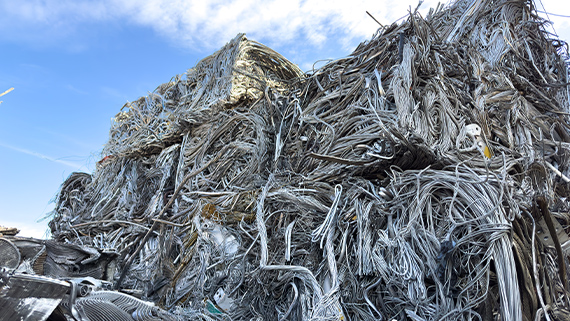
End of metal life: Disposal of pressed wire and aluminum radiators.
The lifespan of an object is the expected length of time that the object will function as expected assuming the owner maintains the item and it is used as expected. If the owner of the washing machine launders 40 loads a day, often with objects that should not be placed in a washing machine, the machine is likely to break sooner.
The following image depicts the typical lifecycle of an object. You'll notice that there are two paths the object can take: one which takes an object from extraction to recycling, or from extraction to landfill.
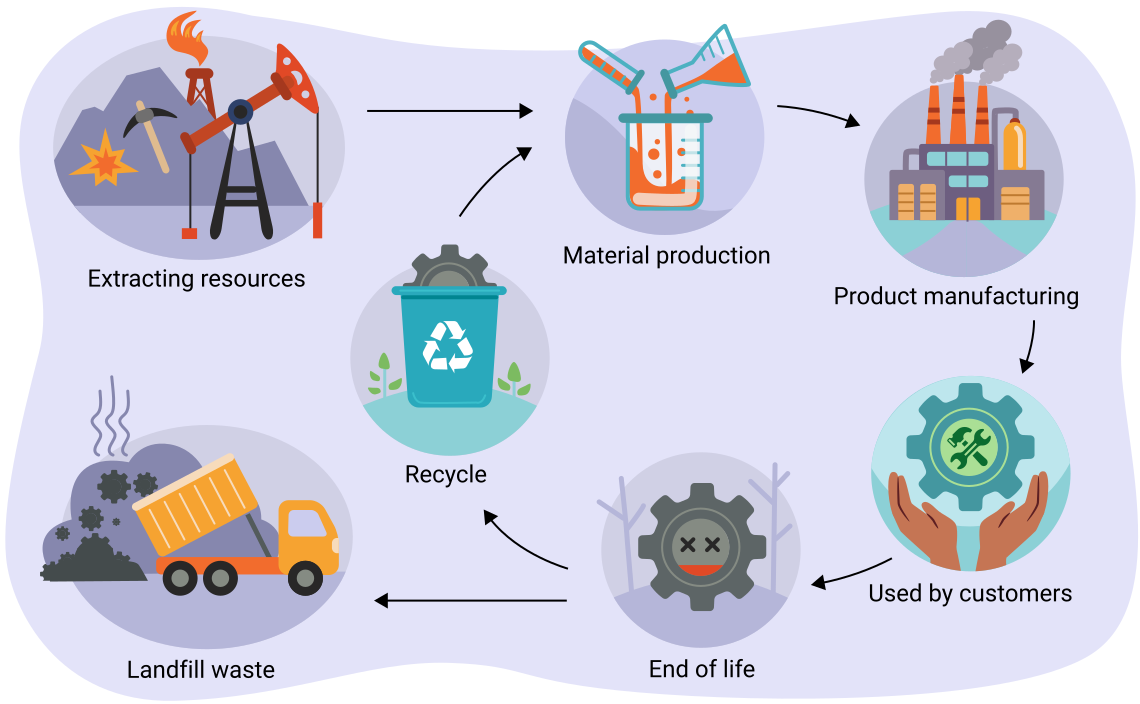
A flow depicting the lifespan of an object. The flow begins with extracting resources. From there, a cycle starts flowing through material production, product manufacturing, used by customers, end-of-life, and recycle. At the end-of-life stage, either end the flow at landfill waste or continue to recycle which will repeat the cycle.
Try it!

It is important to understand that the technology we use every day has a limited lifespan.
Try the following interactive to guess the average lifespan of everyday technology.
Recycling and disposing of electronic devices
What happens to these devices at the end of their lifespan? Many of these devices have components that can be reused, refurbished, or recycled.
Definition
Refurbished
A refurbished product has been used and then tested to make sure that it will function correctly.
Purchasing a refurbished device can keep products out of the landfill and save you money!
Recycling electronic devices
Where you live will determine how you should best dispose of your electronic products once they have reached the end of their lifespan.
Learning journal
Use your favourite search engine and search for information on local electronic recycling options available to you.
Record in your learning journal the information you have found about local recycling options. If there are no local recycling options, reflect on the best way to dispose of electronic waste in your community.

Ethics, accessibility, and daily environmental considerations
Learning journal
Make connections between the content covered in this learning activity and your IoT device. Consider each of the following prompts:
- Are there ethical considerations, if any, of your IoT device?
- To whom is your device accessible, not accessible? Is there a way to make the device more accessible? Is there another product on the market that is similar to your device but marketed differently or designed differently to be more accessible?
- What metals are needed to build your device? If you cannot find an exact list, look at the battery included in the device, or the common elements needed to build this type of device.
- What is the average lifespan of this device?
- What is the recommended method of disposal for your device?
Include the references to any source material you use to find answers to these questions.
At the end of this unit, you will need the answers to these questions for your Unit 1 assessment. If you are unclear about the concepts from this learning activity as they connect to your IoT device, take the time now to reach out to your teacher for support.
Portfolio

When you are ready, share your learning journal entries from Learning Activity 1.3 with your teacher for feedback.
Learning skills reflection survey

It is important to reflect on your learning at the end of each learning activity. It will help you and your teacher understand where you are in your learning and what areas you may need to review further. Take a few minutes to complete the following Learning Skills Reflection Survey.
Conclusion
In this learning activity, you learned about how devices are made with ethical considerations, an understanding of making devices as accessible as possible, and what environmental concerns exist regarding digital technology.
In the next learning activity, you will explore cybersecurity and learn more about protecting your personal data and your devices.