Introduction

In our last learning activity, you learned that human or lifespan development refers to the study of the ways that people both change and stay the same, from conception to death. Human development is a social science that draws on knowledge from several social science disciplines, including psychology, sociology, and anthropology.
Developmental psychology is the area of research that investigates key questions to help us better understand how we change over the lifespan.
In this part of the learning activity, you will be exploring prominent theories on human development from the field of psychology. In the next learning activity, we will continue to explore additional theoretical frameworks to build on our understanding of the human development process.
Notebook

There will be opportunities throughout this learning activity to address some of the concepts we’ll be focusing on today.
As you work through the content, consider recording or jotting down in your notebook some of the key terms and definitions that come up, including words that may be new to you.
Now that you’ve settled into this learning activity, let’s explore the theories of development!
Theories of development

There are a wide range of theoretical perspectives on human development. Each theoretical perspective helps us to understand the lifespan development puzzle.
Although theorists may sometimes disagree about specific aspects of human development, many of their ideas are complementary rather than contradictory.
Together, the various theories help us to see a broader picture of lifespan development.
Explore this!

Explore the following video entitled An introduction to the discipline of Psychology to learn a bit more about the study of psychology and how it connects to our learning today.
Join the discussion

The big questions forum
After exploring the video, answer the following questions in the discussion forum below:
- What “big question(s)” are you interested in learning about in this course?
- What resources are available for you find the answers to the question(s) posed in psychology?
Give these questions some thought and be sure to explore some of the responses given by your classmates.
You may also want to reply to their posts (for example, engage with them and inform them about where they can find out more about a certain topic/question in psychology).
We will explore some of these questions in our learning today.


What is a theory?
A theory is an interrelated, coherent set of ideas that helps to explain phenomena. In the study of human development, a theory can help us to better understand behaviours or the impact of events or experiences that occur throughout an individual's lifespan. It is important to note that a theory is not a scientific law.
Definition

A scientific law is a statement based on repeated experimentation or observations that describe or predict phenomena.
A law predicts what will happen, while a theory is a proposed explanation of the event. There may be multiple theories or ideas that can be used to explain any given event or phenomenon.
Theories on development
There are several theories that are used to explain human development throughout the lifespan.
We will start by focusing on three major theories in chronological order below:
- psychoanalytic theories
- cognitive theories
- behavioural and social cognitive theories
Psychoanalytic theories
Psychoanalytic theories or the psychodynamic approach focuses on the role of unconscious thoughts, feelings, and memories.
Early experiences with caregiver(s) extensively shape our development. Two well-known theories around these experiences include:
- Sigmund Freud’s theory: five stages of psychosexual development
- Erik Erikson’s psychosocial theory: eight stages of psychosocial development
Let’s explore some of the psychoanalytic theories!
Freud’s theory of the unconscious mind
Freud (1856–1939) did not invent the idea of the conscious vs. unconscious mind, but he did make the idea popular.
Freud’s iceberg model of the mind includes features of the mind’s structure using the analogy of an iceberg to describe three levels: conscious, preconscious, and unconscious. According to Freud, much like an iceberg, the majority of an individual’s mind is hidden below the surface. Freud (1915) described the conscious mind, or the mental processes of which we are aware, as the “tip of the iceberg.”
Press Freud’s iceberg model button to explore an example that incorporates the three distinct levels.
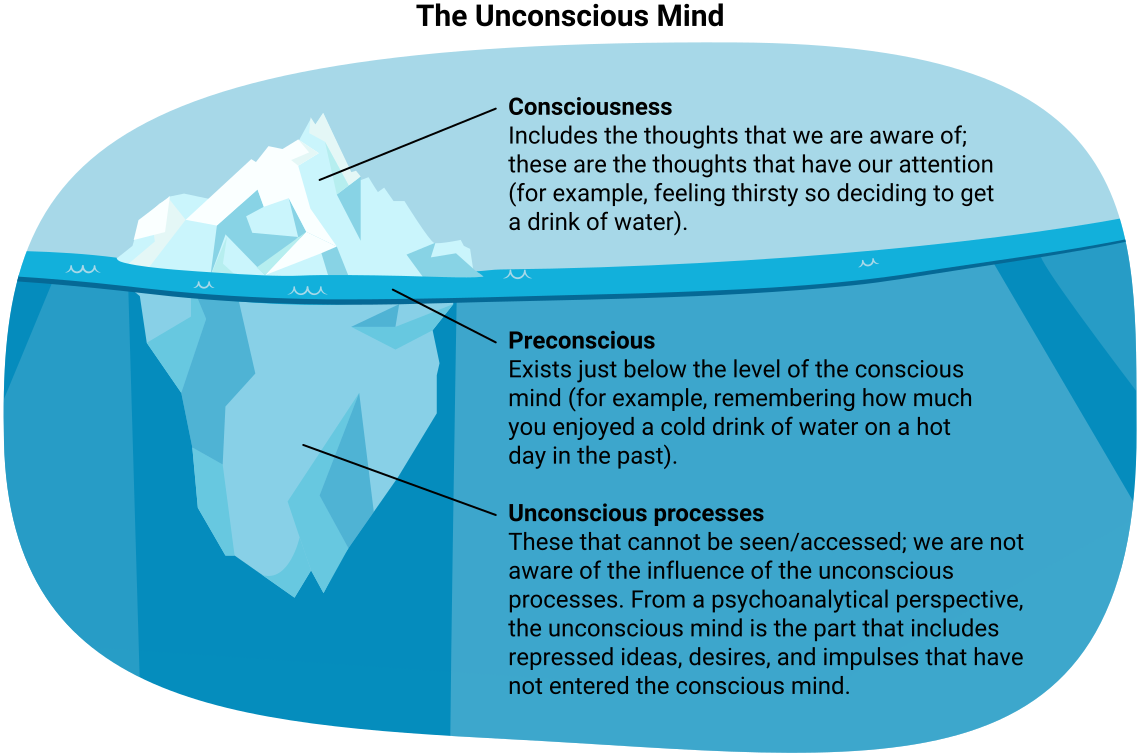
Freud’s iceberg theory represented by an iceberg with three distinct levels. The three levels are: Consciousness: Includes the thoughts that we are aware of; these are the thoughts that have our attention (for example, feeling thirsty so deciding to get a drink of water); Preconscious: Exists just below the level of the conscious mind (for example, remembering how much you enjoyed a cold drink of water on a hot day in the past); Unconscious processes: These that cannot be seen/accessed; we are not aware of the influence of the unconscious processes. From a psychoanalytical perspective, the unconscious mind is the part that includes repressed ideas, desires and impulses that have not entered the conscious mind.
Freud’s theory of personality: id, ego, and superego

Freud also proposed that the mind is divided into three components: the id, ego, and superego. The id, ego, and superego are not physical parts of the brain; they are a hypothetical conceptualization of our mental functions.
Freud proposed that these three parts develop at different stages in our lives:
- The id is the primitive, instinctual part of the mind; it contains sexual and aggressive impulses and hidden memories.
- The superego acts as a moral conscience.
- The ego is the realistic part of the mind that mediates between the desires of the id and the superego.
According to Freud, the id, the ego, and the superego interact to form a whole with each part contributing to an individual’s behaviour.
Press the Freud’s Id, Ego, & Superego button to access a diagram of how these three concepts fit into the iceberg model. You may notice that the id, ego, and superego operate below the surface of consciousness. In other words, we may not always be aware that these forces are influencing our day-to-day behaviour.
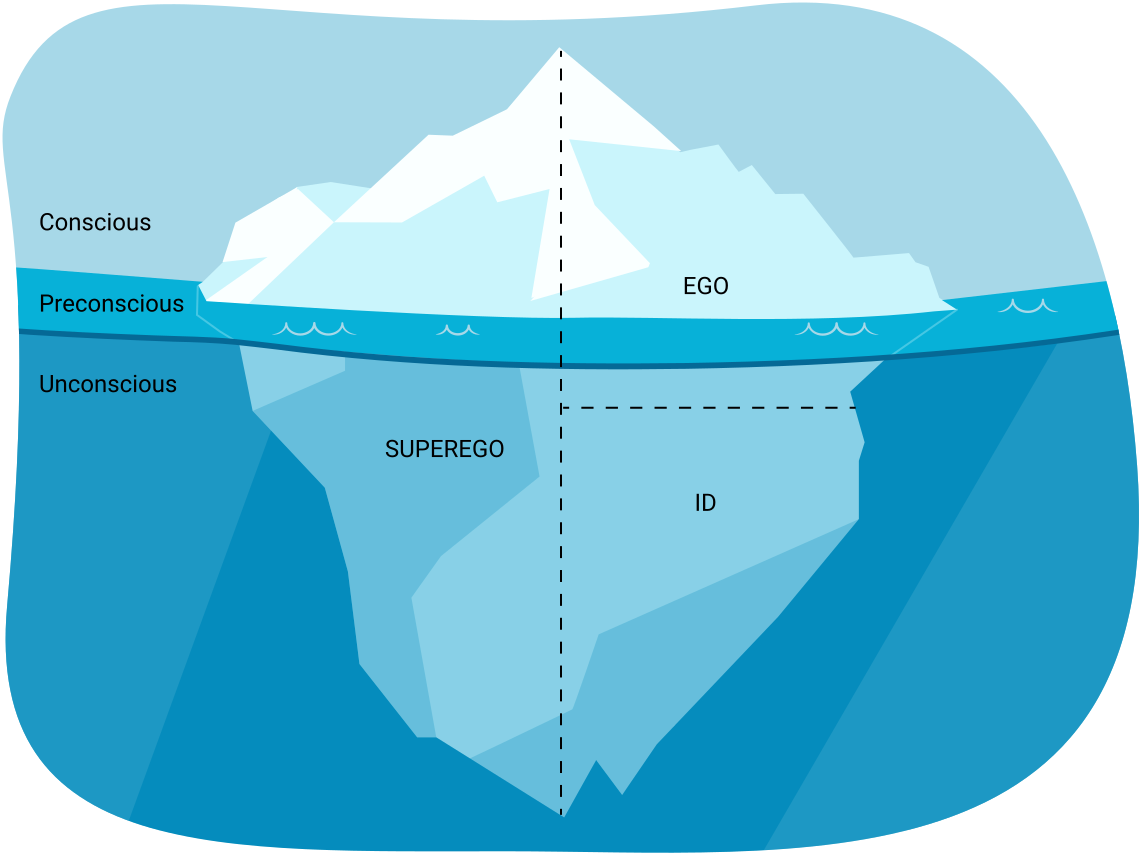
Freud’s id, ego, and superego represented by an iceberg. The superego and the id are submerged while the ego is above sea level. The conscious level is represented by the part of the iceberg above the water, the preconscious level is the surface of the water, and the unconscious level is underwater.
Freud’s stages of psychosexual development
 1
1
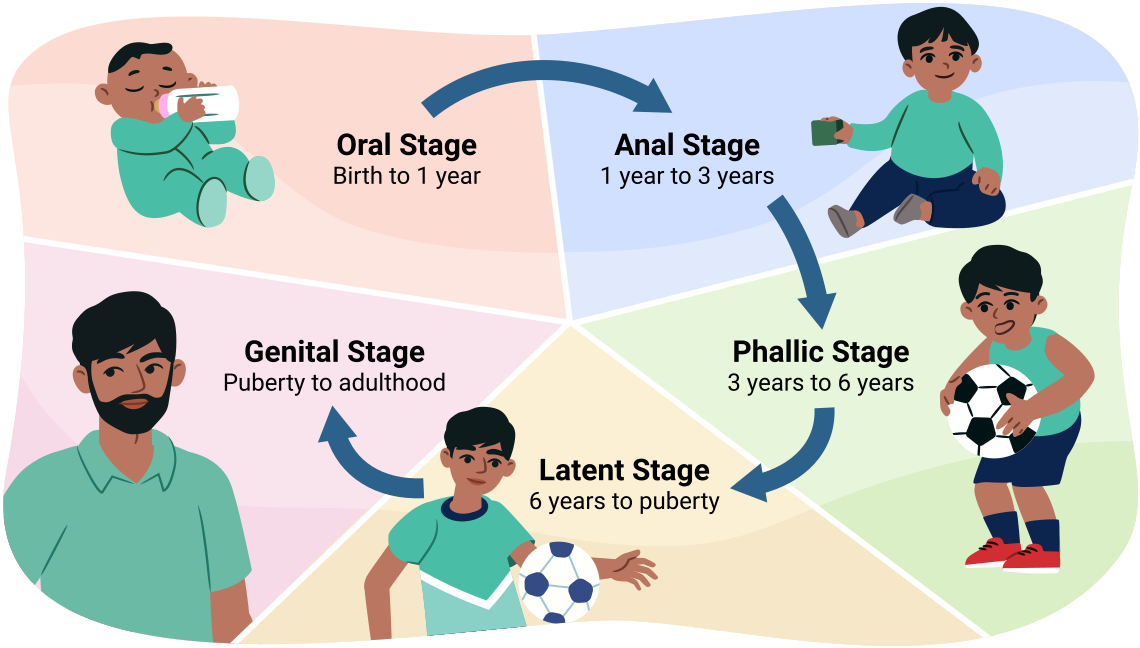
Freud’s stages of psychosexual development. The stages are: 1) oral stage, birth to 1 year; 2) anal stage, 1 year to 3 years; 3) phallic stage, 3 years to 6 years; 4) latent stage, 6 years to puberty; 5) genital stage, puberty to adulthood.
Freud believed that childhood experiences shape our personalities and behaviour in adulthood. Freud saw development as discontinuous; he proposed that we go through a series of stages during childhood and that if we lack nourishment or parenting at any stage, we may become stuck or fixated at that stage.
According to Freud, children’s pleasure-seeking urges are focused on different areas of the body at each of the five stages of development; adult personality is determined by the way we resolve the conflict at each stage.
While much of Freud’s work has not found support in modern research, Freud did make significant contributions to the field of psychology.
Contemporary psychologists dispute Freud’s psychosexual stages as an explanation for personality development. However, we can conclude that personality is shaped to some degree by the experiences we have during childhood.
Erikson’s psychosocial stages of development
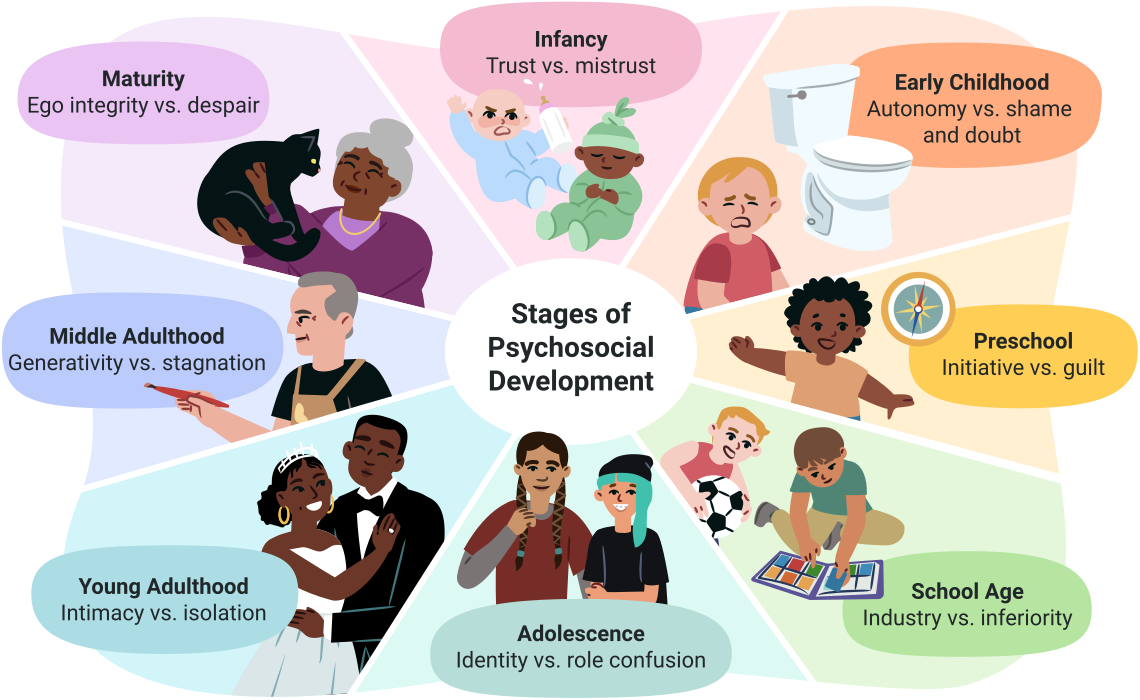 2
2
Erikson’s stages of psychosocial development. The stages are: 1) infancy (trust vs. mistrust); 2) early childhood (autonomy vs. shame and doubt; 3) preschool (initiative vs. guilt); 4) school age (industry vs. inferiority); 5) adolescence (identity vs. role confusion); 6) young adulthood (intimacy vs. isolation); 7) middle adulthood (generativity vs. stagnation); 8) maturity (ego integrity vs. despair)
Erik Erikson (1902–1994) modified Freud’s theory and developed a psychosocial theory of development. Like Freud, Erikson viewed development as discontinuous; Erikson proposed that individuals go through distinct, yet universal stages of development.
Erikson’s psychosocial development theory emphasized the social nature of human development. Erikson was interested in how relationships and social interactions influenced human development. While Freud proposed that personality is shaped during childhood (for example, Freud’s fifth and final stage begins in adolescence), Erikson believed that development continues throughout the lifespan from infancy through late adulthood.
Erikson proposed eight stages of psychosocial development; at each stage, a crisis or a task needs to be resolved. Each stage is concerned with becoming competent or skilled in a specific area of life.
According to Erikson, successful completion of each developmental task results in a sense of competence, while a failure to successfully complete a developmental task leads to feelings of inadequacy in that aspect of development.
Access the following Erikson’s Psychosocial Stages(Opens in a new tab) to download a table detailing the stages for reference. Print a copy and place it in your notebook, or copy the table into your notebook.
After you’ve reviewed the table outlining Erikson’s psychosocial stages, access the following video entitled 8 Stages of Development by Erik Erikson to learn more.
Explore this!
Notebook
After reviewing the information about psychoanalytic theories and exploring the video, respond to the following questions in your notebook:
- What are the implications of suggesting that people go through universal stages of development?
- What are some of the strengths and weaknesses of psychoanalytic theories? Feel free to access reliable sources to help you with your response. Include links to your sources.
Take a break!

Excellent work! You have just completed the section on psychoanalytic theories. Now is a great time to take a break before you move on to the next section on cognitive theories.
Now that you’ve got a sense of what psychoanalysis is, we will explore cognitive psychology and theorists who have contributed to the field. In this next section, you will learn about Jean Piaget, Lev Vygotsky, and the information-processing theory.
Cognitive theories
Unlike psychoanalytic theories, cognitive theories focus on conscious thought or what we are actively thinking about on a day-to-day basis.
The theories that we will uncover in this learning activity will help us to understand how humans develop complex thinking skills (for example, intellectual development).
Piaget’s cognitive development theory
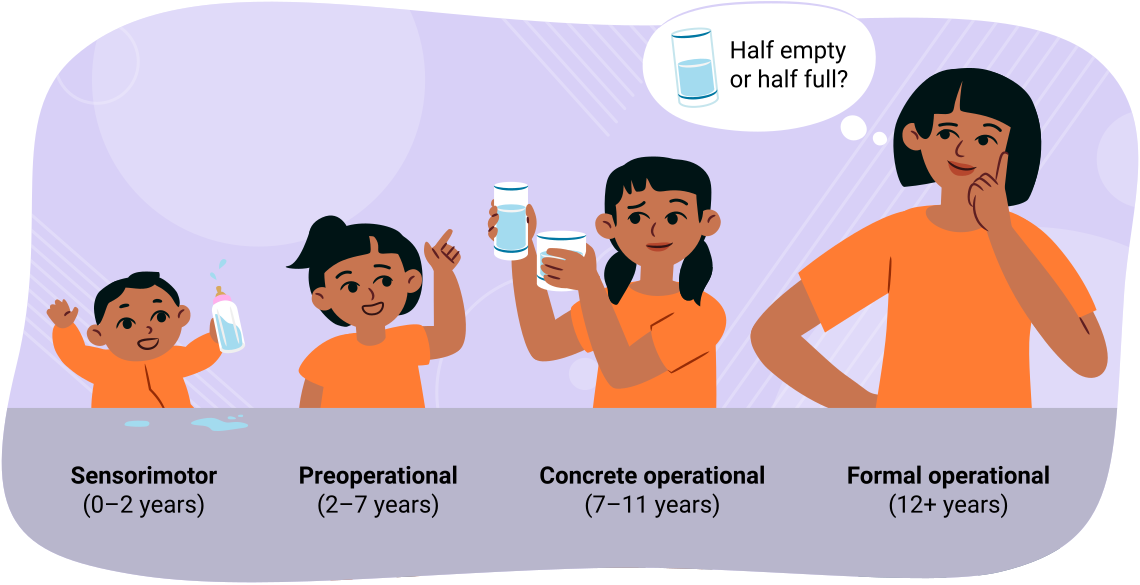 3
3
Jean Piaget (1896–1980) believed that thinking is a key aspect of development and that children think and reason a lot differently than adults do (Piaget, 1930, 1932).
Piaget’s theory of cognitive development suggests that we develop through specific stages. Like the work of Freud and Erikson, Piaget’s cognitive development theory is another example of the discontinuity approach to development.
Piaget believed that cognitive development results from the interplay between an individual’s innate capabilities (nature) and environmental influences (nurture). Piaget highlighted the role of active exploration and interaction with the environment in shaping cognitive development.
Piaget’s stages of cognitive development
Piaget proposed that children progress through four distinct stages with each stage of development resulting in a distinct change or shift in how the child thinks and reasons.
According to Piaget, children go through the stages in the same order (but not at the same rate). Biological maturation and interaction with the environment influence each child’s unique development.
A key element of Piaget’s theory is that creating knowledge is an active process throughout the lifespan.
Explore this!
Explore the following video entitled Piaget's Theory of Cognitive Development to learn more.
Press the following tabs to learn more about these four stages of cognitive development.
Piaget proposed that there is a qualitative rather than a quantitative change in how children think as they move through these four stages.
His theory of cognitive development proposed several factors that influence how children learn and grow, including the following:
Adding new information to knowledge
According to Piaget, cognitive development includes building a mental model of the world.
A schema (plural is “schemata”) helps us to categorize and interpret information; schemas are like the “building blocks” of knowledge.
As new experiences occur, we use the new information to modify, add to, or adjust previously existing schemata through two processes:
- Assimilation which occurs when the new information is adapted and fits into an existing idea or concept held (for example schema)
- Accommodation which occurs when the new information completely changes or alters the schema
Press the Piaget's Assimilation and Accommodation button to access a visual representation.
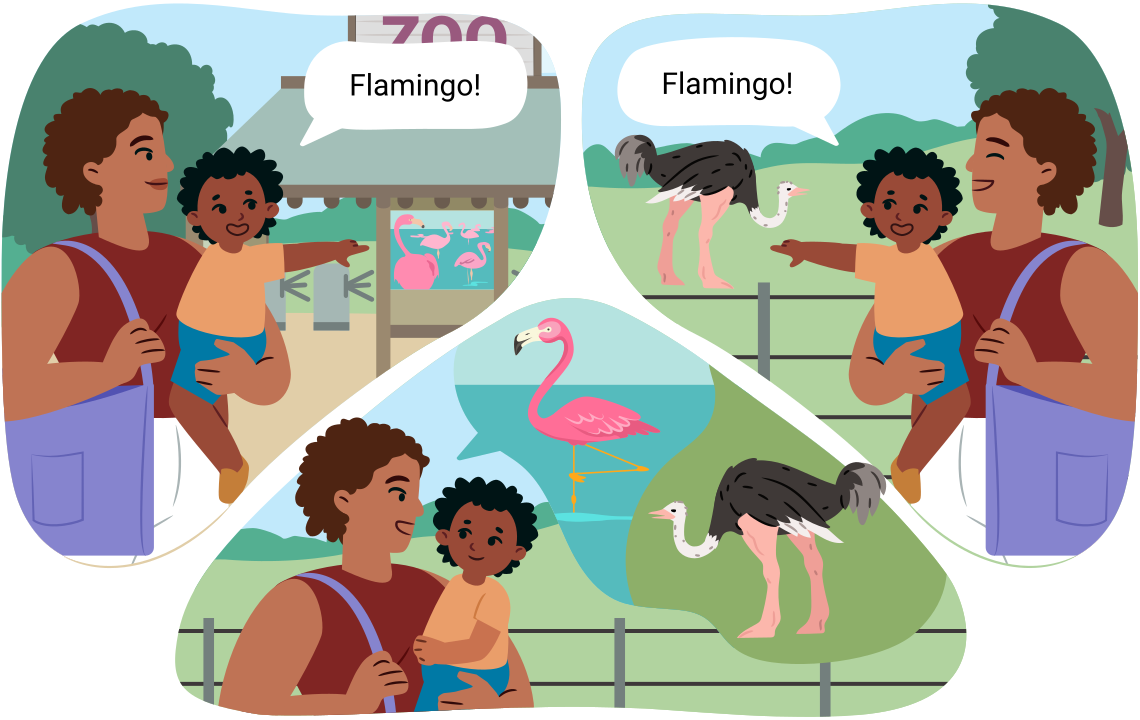
A mother and child are at the zoo, looking at animals. In the first panel, the child sees a flamingo and exclaim "Flamingo!". In the second panel, the child points at an ostrich and exclaims "Flamingo!". In the third panel, the mother explains to the child the difference between a flamingo and an ostrich.
Here, Raena, a two-year-old, is learning about the schema of flamingos.
In the left panel, Raena is visiting the zoo with her family and is introduced to the zoo’s flamingo. The family teaches Raena that flamingos are animals with two legs, feathers, and a beak.
In the top left panel, Raena points to an ostrich and says “Flamingo!”. This is because Raena’s scheme is that anything with two legs, feathers, and a beak is a flamingo. Raena is using her existing knowledge of a flamingo to make sense of the new information.
In the middle panel, Raena’s mom explains to her that the ostrich is a different kind of animal. Raena accommodates her existing schema for flamingos to understand that ostriches are also two-legged animals. Raena successfully builds a new schema of birds with two legs, feathers, and a beak.
Vygotsky’s sociocultural theory of development
Lev Vygotsky (1896-1934) believed that cognitive development is influenced by cultural and social factors. Vygotsky highlighted the role of social interaction in the development of cognitive abilities (for example, language development and reasoning).
According to Vygotsky, cognitive development depends on collaborating and interacting with more knowledgeable individuals in one’s surroundings.
- The more knowledgeable other (MKO) is someone who has greater understanding or a higher level of ability than the learner; the MKO can be a teacher, parent, coach, or a peer who can provide guidance to the learner.
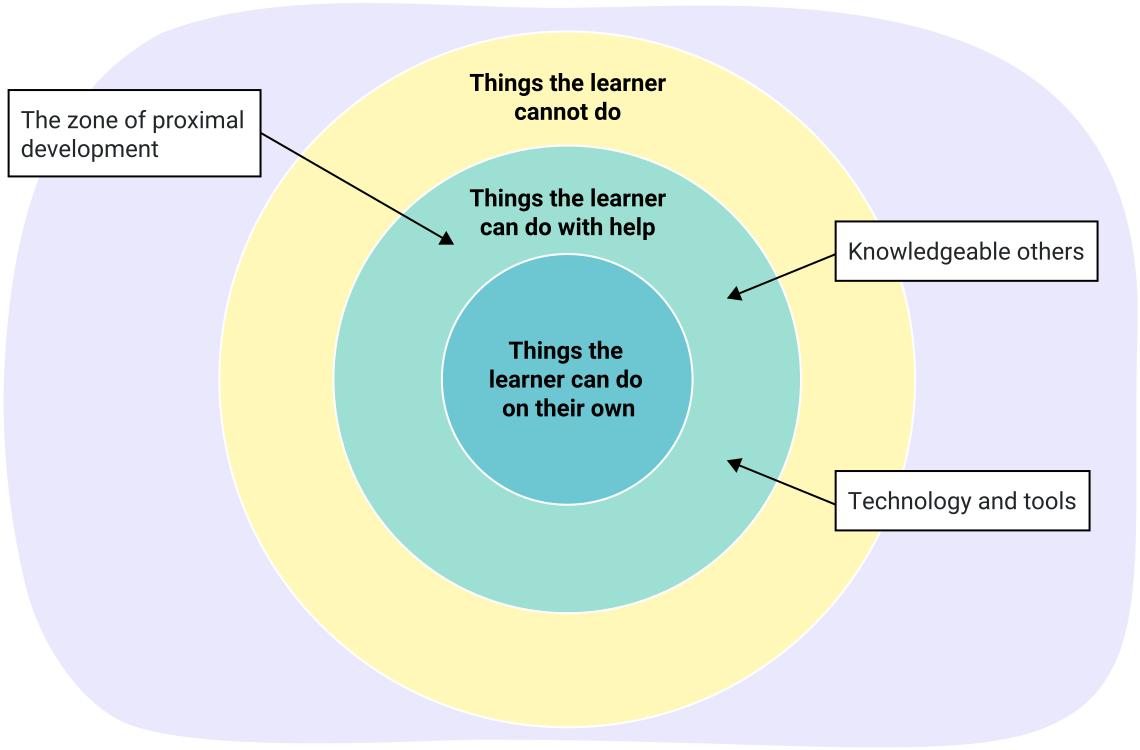
- The learner’s zone of proximal development (ZPD) is the gap between what they can do independently and what they can achieve with support from others like the MKO.
- When the MKO provides support within the learner’s ZPD, the interaction creates an opportunity for the learner to increase their knowledge and skills. This is because they are operating within the range of the learner’s abilities.
- Vygotsky believed that adults enhance children’s cognitive development through engagement in challenging and meaningful activities.
 4
4
The zone of proximal development. There are three overlapping circles. The outer circle is labelled "things the learner cannot do". The second circle is labelled "things the learner can do with help" and there are three arrows pointing to it. One arrow is labelled "The zone of proximal development" and the other two arrows are labelled "Knowledgeable others" and "Technology and tools". The centre circle is labelled "things the learner can do on their own”.
The term scaffolding has become associated with Vygotsky’s ZPD; however, Vygotsky did not use the term scaffolding in his work. This term was introduced by Wood, Bruner, and Ross (1976).
Definition
Scaffolding is an instructional concept where a teacher (or MKO) arranges tasks to help a learner extend their knowledge and develop new skills. The support of the MKO gradually decreases as the learner’s skills and understanding increases. A key element of scaffolding is engaging the learner throughout the process.
Information processing theory
Information processing theory is based on the idea that humans process information they receive rather than respond to external stimuli.
Like a computer, an individual’s mind analyzes information and determines how the information will be stored.
Using this model, complex behaviours such as learning, remembering, categorizing, and thinking can be broken down into a series of smaller specific steps.
As the individual develops strategies for processing information, they can learn more complex concepts.
Origins of information processing theory
Information processing theory can be traced back to the work of cognitive psychologist and computer scientist George Miller (1920–2012). Miller proposed that humans have a limited capacity of storing up to seven items in their short-term memory (for example, remembering a phone number).
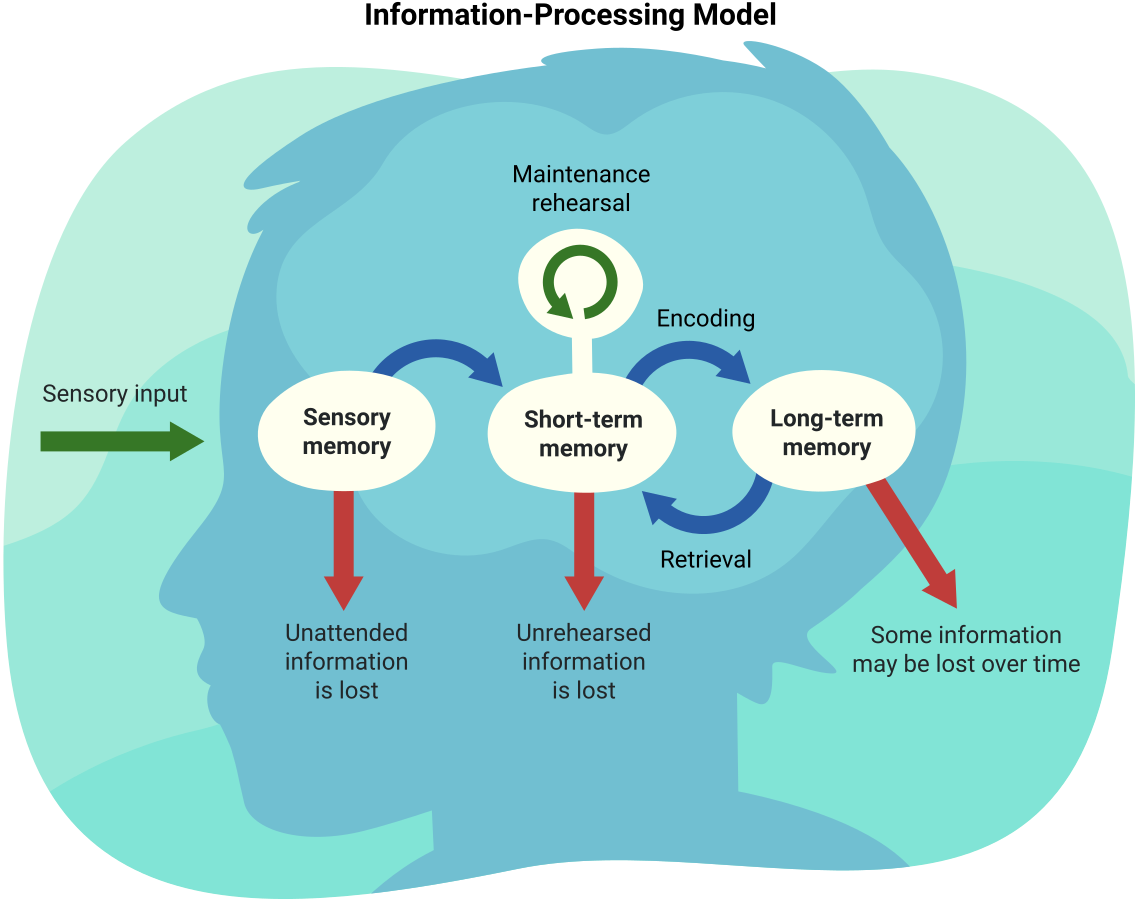
One of the most common information-processing models is connected to understanding memory and the way information is encoded, stored, and retrieved in the brain (Atkinson & Shiffrin, 1968).
Press Information-Processing Model button to access a visual representation of the model.
 5
5
The information processing model comprised of three kinds of memory: sensory, short-term, and long-term. Sensory input flows into the sensory memory, and unattended information is lost. Attention flows into the short-term memory, and unrehearsed information is lost. Short-term memory encodes long-term memory, and long-term memory retrieves short-term memory. In long-term memory, some information may be lost over time. In short-term memory, there is also an aspect called maintenance rehearsal.
According to this model, the mind’s “machinery” allows us to take in information from our environment while processing it through our working memory. Then, we store it in our long-term memory.
The information processing model emphasizes a continuous pattern of development. In other words, as we progress from childhood to adolescence and adulthood, our brain advances in its ability to process and respond to information.
Explore this!
Explore the following video entitled The Multi-Store Model: How We Make Memories to learn more about the information processing model of human memory.
Now that you have a better idea of the information processing model, let’s move on to a notebook activity and take this opportunity to review some questions.
Notebook
After reviewing the information about cognitive development theories, respond to the following question in your notebook:
- What do you think might affect healthy cognitive development? Consider some of the factors that were discussed in the previous learning activity.
Take a break!
Excellent work! You have just completed the section on cognitive theories. Now is a great time to take a break before you move on to the next section on behavioural and social cognitive theories.
Behavioural and social cognitive theories
Earlier in this activity, we learned that psychoanalytical theories focus on the role of unconscious thoughts, feelings, and memories. In contrast, the behavioural perspective says that we can only scientifically study what can be directly observed and measured.
Behavioural and social cognitive theories describe development in terms of behaviours learned through interactions with our environment. These theories also emphasize a continuity in development.
We will briefly review the following perspectives on behaviourism in this learning activity:
- Ivan Pavlov’s classical conditioning
- John B. Watson’s application of classical conditioning
- B.F. Skinner’s operant conditioning
- Albert Bandura’s social cognitive theory
Ivan Pavlov and classical conditioning
Behaviourism emerged in the early twentieth century and quickly became an influential psychological perspective. Russian physiologist Ivan Pavlov (1849–1936) influenced early behaviourist perspectives. Pavlov’s work on conditioned learning, also known as classical conditioning, proposed that behaviours can be learned through the association between stimuli or objects in the environment.
Definition
Classical conditioning is learning through association.
Although classical conditioning is a widely recognized psychological theory, its origins lie in Pavlov’s physiological study of digestion. As Pavlov recorded the amount of saliva that laboratory dogs produced when they ate, he noticed that they started to salivate before food arrived. Pavlov realized that the dogs associated the sound (stimuli) of the researchers’ footsteps with the food; the dogs learned that when they heard a researcher coming, food was on its way!
A learned response is called a “conditioned” response. Pavlov expanded his experiment to include different objects or sounds (stimuli). For example, when he rang a bell (stimuli) prior to introducing the food, he noticed that the dogs began to salivate over time. When the bell became an event that triggered salivation in the dogs (the learned or conditioned response), the bell was called a conditioned stimulus. You can see how this process looks like in the following image and video.
Explore the following video entitled Pavlov’s Classical Conditioning to learn more about this concept.
Explore this!
Now that you’ve reviewed classical conditioning, you might be wondering: how does this connect to us as humans? Psychologist John B. Watson (1878–1958) believed that everything we do is a pattern of stimulus and response, including our speech and emotions.
Watson and his graduate assistant, Rosalie Raynor (1898–1935), applied the conditioning approach in the controversial “Little Albert Experiment” (1920). They conditioned a small child to fear a white rat by making a loud noise each time the animal was introduced. This caused Albert to fear any furry and white object. The ethics of the experiment are often criticized since the child’s fear was not de-conditioned or unlearned.
Skinner’s operant conditioning
Unlike classical conditioning which associates an involuntary response (for example, salivation in dogs) with a stimulus (such as a bell or a whistle), operant conditioning associates behaviour that is voluntary with a consequence of some kind (for example, being rewarded with a treat after doing a favourable act).
Behaviourist B.F. Skinner (1904–1990) was the first to describe operant conditioning. He was interested in how the consequences of an individual’s actions influenced their behaviour (operant conditioning). Skinner was influenced by the work of Edward Thorndike (1874–1949). Thorndike proposed the law of effect, which are actions that are followed by desirable outcomes and are more likely to be repeated than those followed by undesirable outcomes.
Access the following interactive entitled Operant Conditioning to learn more about the components of a Skinner box.
A Skinner box is the device that was used to record an animal’s behaviour. The animal was rewarded or punished for engaging in certain behaviours (for example having rats pressing a lever to receive food).
Albert Bandura’s social learning theory
Social learning theory is sometimes described as the bridge between behaviourism (for example, traditional learning theory) and cognitive development theories. This theory considers how cognitive factors are involved in learning.
Albert Bandura (1925–2021) proposed that people learn behaviours by observing and imitating others. Bandura proposed that learning occurs within a social context; observing others leads to modeling and, in turn, an imitation or adoption of observed behaviours.
Observational learning does not require reinforcement, but it does rely on the presence of others who are referred to as “social models”. Social models are generally individuals of a higher status or authority when compared to the observer (for example parents, teachers, or others who already hold the desired knowledge).
According to Bandura, observational learning requires:
- Attention – The learner needs to pay attention to what they are observing so that they can learn.
- Retention – The learner needs to be able to remember or retain the behaviour they are observing.
- Initiation – The learner must be able to initiate or execute the new learned behaviour.
- Motivation – The learner must want to engage in observational learning.
Access the following video entitled The Bandura Bobo Doll Experiment to learn more about observational learning. You will notice that the child imitates the behaviour of the adult. This is an example of how observational learning through the presence of social models can influence or impact the behaviour of children in either a positive or a negative manner.
Explore this!
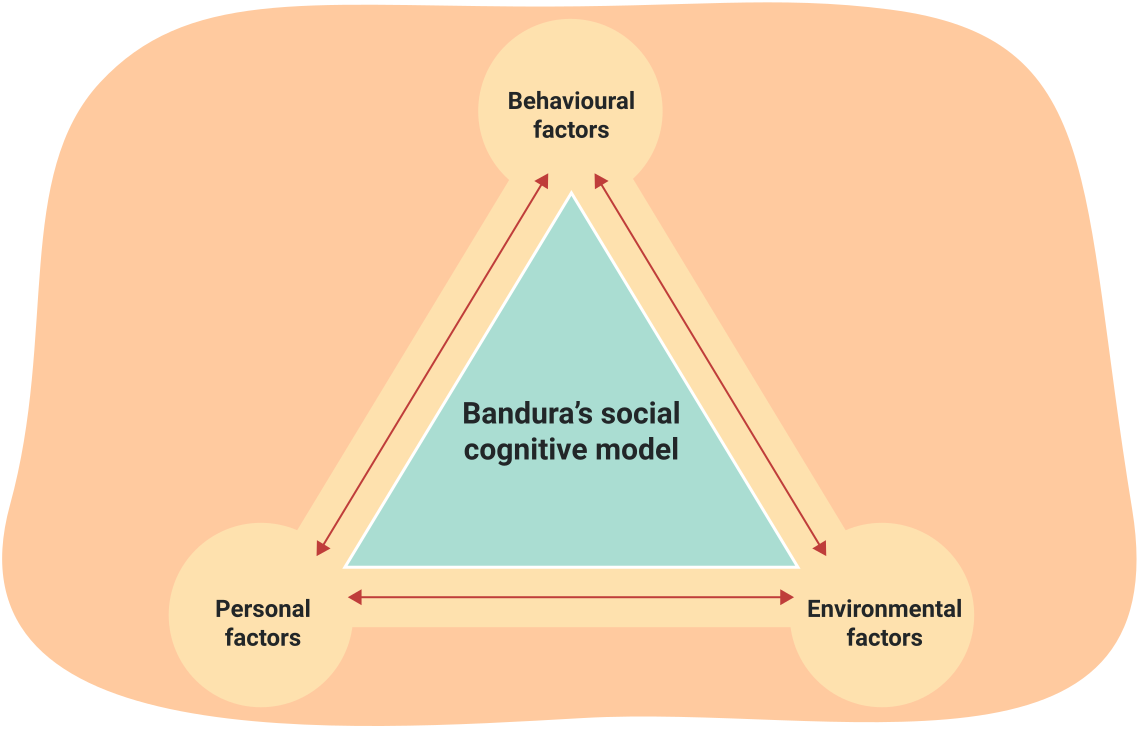
Bandura’s social cognitive model of learning
Explore the following image that represents Bandura’s most recent model of learning and development. The arrows illustrate the reciprocity between all three factors of learning (behaviour, personal, and environment).
 6
6
Notebook
After reviewing the information about behavioural and social cognitive theories, complete the following exercises in your notebook.
- Using the resources available to you, find an example of each of the three types of learning mentioned:
- classical conditioning
- operant conditioning
- social cognitive learning
- Include a visual to illustrate the example used. This can be an image, video clip, or other media. Remember to include the link to your source if you use a website or video.


Theories of development
This learning activity provided us with an overview of some of the dominant theories and theoretical perspectives on human development, including:
- psychoanalytic (Freud, Erikson)
- cognitive (Piaget, Vygotsky, information processing)
- behaviourism and social cognitive (Pavlov, Watson, Skinner, Bandura)
In the next learning activity, we will explore the theories and perspectives of human development from ethology, ecology, and humanism.