Learn and lead
In the previous learning activities, you learned what your personality and learning styles are, and created a resume highlighting your skills and experiences. In this learning activity, you will learn about various types of leadership styles, and reflect on which styles best suit you. Finally, you will learn about a famous Canadian leader, and evaluate the Canadian leader based on the characteristics of an effective leader.
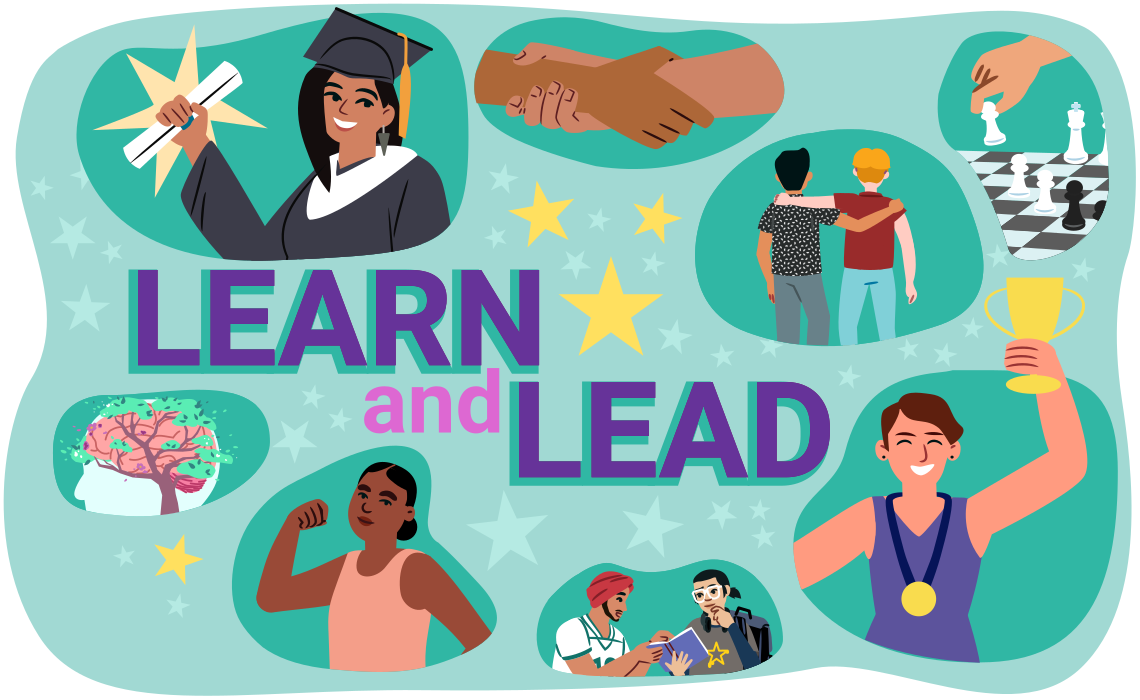
A collection of illustrations that represent the concept 'learn and lead', such as a runner holding a trophy, a hand moving a chess piece, two people walking and hugging each other from the side, a handshake between two people, a person holding their graduation diploma, a tree full of leaves showing mental growth, a person flexing one arm to show strength, two people talking and checking a notebook.
Think

- What does it mean to lead?
- What characteristics make an effective leader?
- Have you ever led an event at your school or in your community?

What is your leadership style?
There are over fifty different types of leadership styles. In this learning activity, we will focus on only five. As you read the following five styles, you may notice that you could be a combination of the different styles. The way you lead can also vary depending on your circumstances, which may change over time.
Press on the following tabs to learn more about each leadership style.
After having explored the five different types of leadership styles, let’s practice what we've learned in the following activity.
For each leadership style, select the corresponding description.
After reviewing the information on the five different types of leadership styles, it’s time to make a personal reflection.
Notebook

In your notebook, answer one of the following two questions based on your experiences:
- Have you ever used one of these leadership styles? What did you do? How do you know you were an effective leader? Describe the situation.
- If you haven't had the chance to take on a leadership role yourself, can you think of an example when you've observed a leader who demonstrated one of these five styles? Describe the situation and its outcome.
You will use this information to help you with the personal profile at the end of this unit.
Leadership skills

What makes a good leader? What qualities should they have? These are the questions that many teachers, experts, and organizations have asked to help train the next generation of leaders. The following section explores ten of the top qualities found in leadership.
Press on the following icons in the interactive image to learn more about each leadership characteristic.
After accessing the material, complete the following tasks.
Notebook
In your notebook, copy or draw the following table to fill out.
For each leadership characteristic, define each term and record when you might have demonstrated that characteristic. If you have never demonstrated the characteristic, think about opportunities at school and in the community that will help you develop and demonstrate that characteristic.
| Leadership characteristic | Description |
When did you demonstrate this characteristic? If you have never demonstrated it, what opportunities can you think of at school and in the community that will help you to do so? |
|---|---|---|
|
Integrity |
||
|
Delegation |
||
|
Communication |
||
|
Self-awareness |
||
|
Gratitude |
||
|
Learning agility |
||
|
Influence |
||
|
Empathy |
||
|
Courage |
||
|
Respect |
Join the discussion

Characteristics of a good leader
In the discussion board, please share your thoughts on which three characteristics you feel all great leaders should have. Be sure to describe the characteristic in your own words and why you feel it is a characteristic every leader should have. Use a minimum of one-two sentences to describe each characteristic.
Please respond to two or three peers’ responses by building, extending, or making a connection to something shared. Keep in mind that this is a classroom space, and you are expected to communicate with respect online.
Press the Join The Discussion button when you’re ready to engage.
Learning reflections
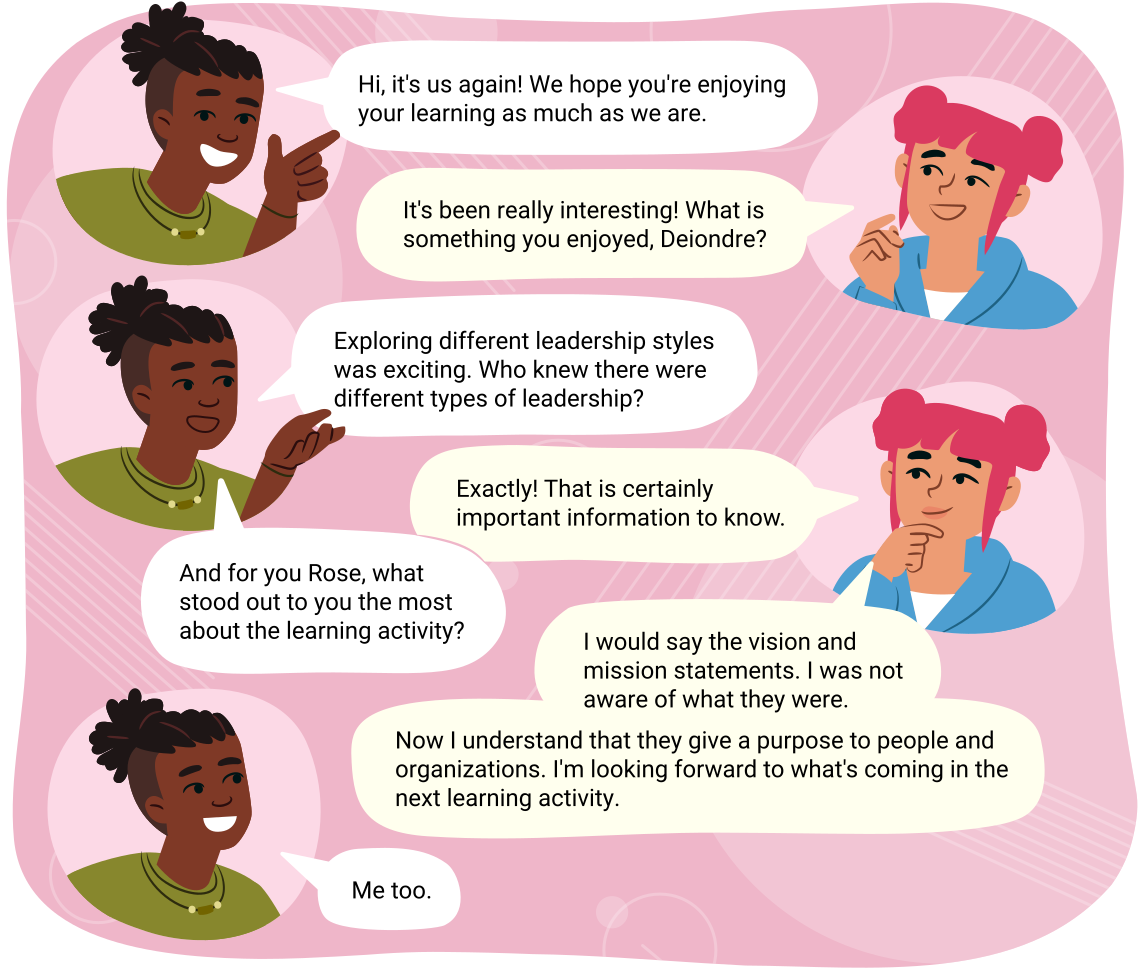
Rose and Deiondre dialogue.
Deiondre: Hi, it's us again! We hope you're enjoying your learning as much as we are.
Rose: It's been really interesting! What is something you enjoyed, Deiondre?
Deiondre: Exploring different leadership styles was exciting. Who knew there were different types of leadership?
Rose: Exactly! That is certainly important information to know.
Deiondre: And for you Rose, what stood out to you the most about the learning activity?
Rose: I would say the vision and mission statements. I was not aware of what they were. Now I understand that they give a purpose to people and organizations. I'm looking forward to what's coming in the next learning activity.
Deiondre: Me too.
Think
In this learning activity, we’ve had the chance to explore different leadership styles. Now consider the qualities that make someone a leader by reflecting on the following questions:
- How do leaders become elected or chosen by their peers and others?
- Does someone need to be influential to be considered a leader?
As you are learning more about yourself, it’s important to stop and reflect on who you are both as a learner and leader. Which leadership styles do you relate to the most?
Next time, we will continue to learn more about ourselves by looking at what qualities make people successful. As we navigate this in the upcoming learning activity, consider whether hard work trumps intelligence, or if it is a mixture of both.