This learning activity focuses on promotion, the last of marketing’s four Ps.
It compares the various ways of promoting a selected product to different market groups, using examples of a variety of retail promotional techniques, such as newspaper and magazine ads, flyers, brochures, coupons.
You will learn how advertising and promotion relates to actual business cases.
Think

Reflect on your experiences as a consumer. Have you ever purchased a product based solely on an advertisement or promotional gimmick? What was so appealing to you about these promotions?

Promotion

The founder of Amazon.com, Jeff Bezos, has famously said that a company’s overall brand “is like a reputation for a person. You earn reputation by trying to do hard things well.”
In modern business, a brand is the mental associations surrounding a product or line of products.
Promotion includes all of the activities that inform potential consumers about the advantages of a specific product or service. Each promotional activity focuses on one or more brand-related goals.
Promoting your products
Promotion has four objects or goals, which are:
Advertising methods
There are three primary methods that businesses use to promote their products or services:
- advertising
- publicity
- sales promotion
Advertising
Definition

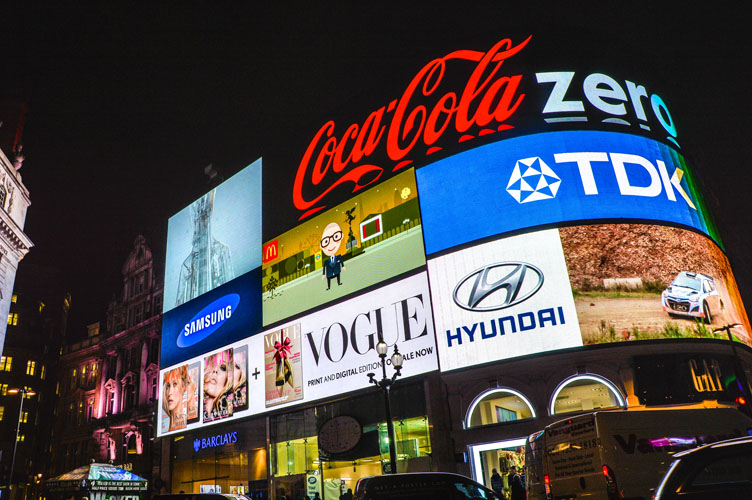
Advertising is the paid-for promotion of a business’s goods and services over a variety of mass media to a target market of consumers.

McDonald’s is one of the strongest brands in the world and it’s no coincidence. According to Statista.com, McDonald’s Corporation spent approximately $654.7 million on its worldwide advertising in 2020. In that same year, they recorded a net income of $4.7 billion.
The purpose of advertising is to make consumers recall a specific product when they are ready to buy one. If you wanted to buy a hamburger and fries tonight, would you think of McDonald’s?
No one will buy a hamburger because Ronald McDonald told them to. But, an affordable restaurant that has a clown mascot that kids love to visit offering food that’s fast and cheap and in a clean place – that is a restaurant families want to visit.
An advertisement communicates positive things about a product or service. Advertisers don’t spend millions of dollars to say negative things about themselves. Some ads are less effective than others, especially if they are not very credible.
Publicity

In contrast to advertising, publicity is mostly free. Since advertisers haven’t paid for broadcast time, Internet exposure, or print space, they don’t control what is said about the company. Publicity can be positive, neutral, or negative, and is therefore trusted more than advertising. Many companies try to control their publicity by hiring and paying a public relations firm to draw attention to positive stories about them. A public relations firm might create press releases or press kits, sending them to various media in the hopes that the media will use them.
Think
Think of a situation where a business has received publicity in the media. Was this good or bad publicity?
Social media
With the advancement of the Internet, social media has become a very powerful marketing tool for businesses. Having a strong social media presence often helps with the above-mentioned advertising methods. Social media allows for two – way communication between merchant and consumers, which traditional advertising methods typically do not allow. Platforms such as Facebook, Twitter, TikTok, and Instagram have become important marketing business tools for businesses. Often, they use these platforms to advertise new products, sales, and promotions, which is directly targeted to consumers and potential consumers that actively engage with them online. On many of these platforms, consumers may leave comments and questions, and the merchant may respond to them.
Social media also provides businesses with publicity. Many businesses are engaged in corporate social responsibility initiatives that may be overlooked by major news outlets. This could include events such as community clean – up, food drives, etc. These events improve the company image, and many businesses want to highlight these initiatives to the public. Social media allows them to do exactly that as they able to share this information with the public using text, pictures, and videos.
In addition, social media provides businesses with opportunities to collaborate with influencers, social media users who have influence over the purchasing decisions of other users, which they believe are a good fit for their company. Working with an influencer is like getting a celebrity endorsement. Influencers may be celebrities, but they may also be individuals that have built up a substantial following online. Many influencers gain followers by focusing on issues and topics such as health, well-being, technology, video games, pets, just to name a few.
Sales promotion

Definition
Sales promotion is any attempt to directly encourage consumers to buy a product.
A sales promotion is a unique type of advertising that urges consumers to “buy now!” Sales promotional methods include coupons, contests, and premiums, as well as in-store activities such as free samples and special events.
Methods of sales promotion
The following are some common sales promotions used by businesses:
Try it!

For each term, select the corresponding definition from the drop-down menu. Then press Submit to check your answers.
Join the discussion

Think of the time you were motivated to make a purchase at a retailer based on a promotion you came across in an advertisement. Identify the retailer running the promotion and provide the details related to the promotion. What motivated you to make the purchase and are you still satisfied with making that choice today?
Using the retailer you identified from your personal experience, outline a promotion you believe would be effective in convincing you to make another purchase today. In your outline, use one of the methods of promotion introduced in this course.
Submit your outline to the discussion board. Note that you will also be required to submit the promotion outline as an Assessment Opportunity next.
Read your classmates’ posts and respond to at least one of your classmates. In your response, explain whether the promotion outlined by your classmates appeals to you and would influence your purchasing decision. Justify your position. In addition, provide a suggestion you believe would enhance their outlined promotion.
Assessment Opportunity

Promotion outline
This is an Assessment Opportunity which is used to determine where you are in your learning, where you need to go, and how best to get there. Feedback will be provided.
There is one task in this Assessment Opportunity. You will submit the promotion outline from the discussion board you just completed.
Feedback
You may receive the following forms of feedback:
- Your teacher may highlight the phrases on the rubric that best describe your assignment to show you how you have done.
- Your teacher may also provide you with detailed comments about the strengths of your assignment, the areas of the assignment that need improvement, and the steps you should take before submitting another assignment like this one.
Pay careful attention to the following rubric. Your teacher will use it to assess your work. You should refer to it too, so you’ll know exactly what your finished assignment should look like.
Rubric
Success Criteria:
- Demonstrates what motivates purchasing choices (A4).
| Level 4 | Level 3 | Level 2 | Level 1 |
|---|---|---|---|
| With a high degree of effectiveness | With considerable effectiveness | With some effectiveness | With limited effectiveness |
Success Criteria:
- Explains the methods of promotion (A1).
| Level 4 | Level 3 | Level 2 | Level 1 |
|---|---|---|---|
| With a high degree of effectiveness | With considerable effectiveness | With some effectiveness | With limited effectiveness |
Success Criteria:
- Expression and organization of ideas and information.
| Level 4 | Level 3 | Level 2 | Level 1 |
|---|---|---|---|
| With a high degree of effectiveness | With considerable effectiveness | With some effectiveness | With limited effectiveness |
Success Criteria:
- Applies knowledge of course content and theory to classmates’ work (A4).
| Level 4 | Level 3 | Level 2 | Level 1 |
|---|---|---|---|
| With a high degree of effectiveness | With considerable effectiveness | With some effectiveness | With limited effectiveness |
The teacher will assess your work using the rubric. Before submitting your assessment, review the rubric to ensure that you are meeting the success criteria to the best of your ability.
Take a break!

Excellent work! You have just completed the section on advertising methods. Now is a great time to take a break before you move on to advertising criteria.
Advertising criteria
Advertisers evaluate against eight important criteria when deciding which type of advertising to use. Here are the first four:
Clutter describes all of the things that an ad does to compete for an audience’s attention. For example: Print ads compete with other nearby print ads or even photos on the same page. Radio ads during rush hour compete with easily bored station shifters or road traffic, or all of the other things that go on when the radio ad is playing. Television ads compete with each other, an audience bored by previous ads, and people who fast-forward to skip commercials. Advertisers would love to find an uncluttered medium so consumers can focus their attention on just one message—theirs.
Frequency is the number of times an audience is exposed to an advertisement over a given period of time. A high frequency can be effective but costly on some media. Television and radio ads must be played many times before the audience absorbs the message, and there is a fee each time. Some media, such as a pen inscribed with a company’s name or a billboard on a town’s main street, include high frequency as an extra benefit. Most out-of-home advertising will be experienced 20 to 40 times a month by the same commuters. Magazines are often used numerous times before being recycled.
A medium’s mechanical requirements include a number of factors, such as the amount of expertise, number of people, and general complexity of making the advertisement. Slick television ads starring celebrities can be as expensive to produce as some movies. Glossy national magazine ads with photographs have very precise aesthetic and mechanical requirements, and are expensive to shoot and design. Out-of-home advertising has specific requirements for its ad space, and printing costs for the actual billboard or transit ad can double the cost of the space. On the other hand, most newspaper, Internet, and radio ads are quite simple to produce.
Selectivity is the medium’s ability to focus on a specific target audience. Internet advertising can be very selective. For example, an advertisement for a Stratford hotel might appear on the website of the Stratford theatre. In contrast, radio ads are less selective. Some magazines reach a very specific target audience (Modern Bride); others simply reach a large general audience (Maclean’s). A highly selective medium is a far more efficient and effective way to advertise when one exists for your target audience.
Here are the last four criteria you should be aware of:
An advertisement’s reach is composed of the number of people who could experience it. In 2011, nearly 350,000 people purchased Maclean's magazine per month; this is considered its reach. Not everyone will review every single page and some will miss your ad even if they do. Television’s reach is expressed as audience numbers or ratings. For example, the Super Bowl’s reach in the U.S. is an audience of more than 100 million people. Advertisers spend so much time and money creating exceptional ads to air during the game so that the audience remains in their seats to experience them. Naturally, advertisers want all of the reach they are paying for.
Some advertising media last longer than others. Radio and television ads survive for only a few seconds, and then they’re gone. Unless you are exposed to it again or write down the details, you could miss important information. That is the main reason broadcast media rely so much on frequency.
Newspaper ads last from one recycling pickup to another, but most of the time that’s long enough for readers to return to an advertisement for more information. Perhaps you’ve even searched through your recycling pile to find an ad for a local event or a special sale yourself. Magazines might be kept for a month or so. If they are lying with their cover face down, the advertisement on the back cover gets extra exposure, resulting in a higher cost associated with the durability of that page.
When does your ad need to be submitted for it to be printed or aired? Advertisements require lead time. Lead time is the length of time a finished ad has to be submitted in advance of being printed or shown. Television ads require months, as do billboards and magazines. They each have complex mechanical requirements and require extra effort to make the advertising interesting enough to attract attention. Radio and newspapers require only a few days of lead time. Email advertising could be ready and off to consumers within a day.
The total cost of an advertisement is by far the most important consideration you need to make. Costs include preparation as well as the space or time in the medium used to run it.
If you do all the work yourself, a small classified ad may cost only $16, and a late-night radio spot may cost $20. However, your money is wasted if no one is exposed to the ad. Some television ads cost millions, but they increase brand awareness and sales so much that they pay for themselves several times over. The accepted rule is that advertising should cost 5% of projected sales. Presents projected sales of $800,000 for this year, so it should budget advertising expenditures of $800,000 × 0.05 = $40,000.
Assessment Opportunity
This is an Assessment Opportunity and you will be provided with feedback for your write–up.
Presents has the email addresses of more than 600 customers who have subscribed to its online newsletter. However, some customers never open the newsletter, because their inbox is often littered with spam and other emails and they don’t have time to review them all. Although 600 certainly isn’t a large audience, each person has specifically asked to receive the newsletter. Therefore, each is a possible customer. Often, they review the newsletter and then save it on their computer for future reference. Many refer to the newsletter whenever they are searching for a gift.
Pam appreciates how simple it is to stay in touch with customers and sends the newsletter to them only once a month. Pam especially likes that it is a free medium. It does take a few hours to put the newsletter together and send it, but the lead time required for putting an ad in the local paper is much longer.
Reflect on what you’ve learned so far and help Pam with the following decision. Pam wants to increase consumer awareness of Presents and plans on launching either a print ad or social media post soon. However, Pam is undecided about the medium to go with. Use your notebook to create a two-column table comparing print ads and social media posts based on the 8 ad criteria you just learnt. Use the Internet for research to help with your comparison.
Your table must include all 8 criteria. You may use the following example to format your table:
| Print Ad | Social Media |
|---|---|
| Clutter: | Clutter: |
| Frequency: | Frequency: |
| Mechanical requirements: | Mechanical requirements: |
| Selectivity: | Selectivity: |
| Reach: | Reach: |
| Durability: | Durability: |
| Lead time: | Lead time: |
| Total cost: | Total cost: |
Effective retail advertising
To increase sales, an ad needs to get consumers to recall the brand name and to associate it with a specific type of product. Ads that are amazingly artistic, wildly funny, or incredibly creative might not be good ads if you can’t recall anything about the product being sold. Good ads sell products. Recall the four Ps of marketing; good advertising considers product, price, place, and promotion. Now consider, what can advertisers do to be effective regarding each of the four Ps?
Try it!
For each of the four Ps, select the corresponding effectiveness suggestion from the drop-down menu. Then press Submit to check your answers.
The AIDA formula
When creating ads, you should stick to the proven formula: AIDA.
The AIDA formula stands for Attention, Interest, Desire, and Action.
All ads have most of the AIDA formula in them. Good ones have it all.
Press each of the AIDA terms to learn more.
Explore this!

The AIDA formula
Explore the following short video, “Marketing Tools and Branding” for an excellent explanation of modern marketing and product branding.
Think
What can a student of marketing learn from the video you just reviewed?
Promotion and the marketing mix
How does promotion affect the other parts of the marketing mix: product, price, and place?

Assessment Opportunity
A marketing plan for Presents
You are a quarter of the way through this course.
There are three tasks in this Assessment Opportunity.
Task 1: Identify and price a product
You will now propose a new product that Presents should carry. In addition, you will help the store with all of the considerations necessary for carrying this new product.
To start, explain in detail how you will price the product that you would like Presents to carry. Be sure to include:
- all considerations you’ve made
- pricing policy you would use for this new product (remember, to consider factors such as price sensitivity, similar goods, etc.)
Task 2: Logistics and storage
Explain the logistics around how Presents will receive your product, including the method of transportation that will be used. Then, identify any storage requirements for your product within the store. Finally, make some suggestions about how the product should be displayed in the store for customers.
Task 3: Product promotion
Finally, you will describe ways that Presents could promote your product. Include at least two promotional techniques for your product. Be creative and explain the reasoning behind any of your suggestions.
Report format
- suggested report length is 3–5 pages (not including title page and work cited)
- font type suggested – Times New Roman or Arial
- font size 10 – 12
- double spaced
- include title page and titles/headers for each task
- title page should include your name, course name and code, assignment title, date
- page numbers
- work cited format at your teacher’s discretion
Feedback
You may receive the following forms of feedback:
- Your teacher may highlight the phrases on the rubric that best describe your assignment to show you how you have done.
- Your teacher may also provide you with detailed comments about the strengths of your assignment, the areas of the assignment that need improvement, and the steps you should take before submitting another assignment like this one.
Pay careful attention to the following rubric. Your teacher will use it to assess your work. You should refer to it too, so you’ll know exactly what your finished assignment should appear like.
Rubric
Success Criteria:
- Demonstrates an understanding of the marketing mix (A1).
| Level 4 | Level 3 | Level 2 | Level 1 |
|---|---|---|---|
| With a high degree of effectiveness | With considerable effectiveness | With some effectiveness | With limited effectiveness |
Success Criteria:
- Identifies various elements of the marketing mix (A1).
- Identifies the marketing mix's influence on marketing activities (A4).
| Level 4 | Level 3 | Level 2 | Level 1 |
|---|---|---|---|
| With a high degree of effectiveness | With considerable effectiveness | With some effectiveness | With limited effectiveness |
Success Criteria:
- Expression and organization of ideas and information.
| Level 4 | Level 3 | Level 2 | Level 1 |
|---|---|---|---|
| With a high degree of effectiveness | With considerable effectiveness | With some effectiveness | With limited effectiveness |
Success Criteria:
- Creates an effective marketing plan using course content (A1), (A3).
| Level 4 | Level 3 | Level 2 | Level 1 |
|---|---|---|---|
| With a high degree of effectiveness | With considerable effectiveness | With some effectiveness | With limited effectiveness |
The teacher will assess your work using the rubric. Before submitting your assessment, review the rubric to ensure that you are meeting the success criteria to the best of your ability.
Transferable skills survey

Having completed the unit, take the opportunity to review your demonstration of Ontario's Transferable Skills, introduced in 1.1. Complete the Unit 1 Transferable Skills Survey to share your assessment and specific evidence for that rating.